Marketing Tech Summit Guatemala: Learning Faster Becomes a Competitive Advantage
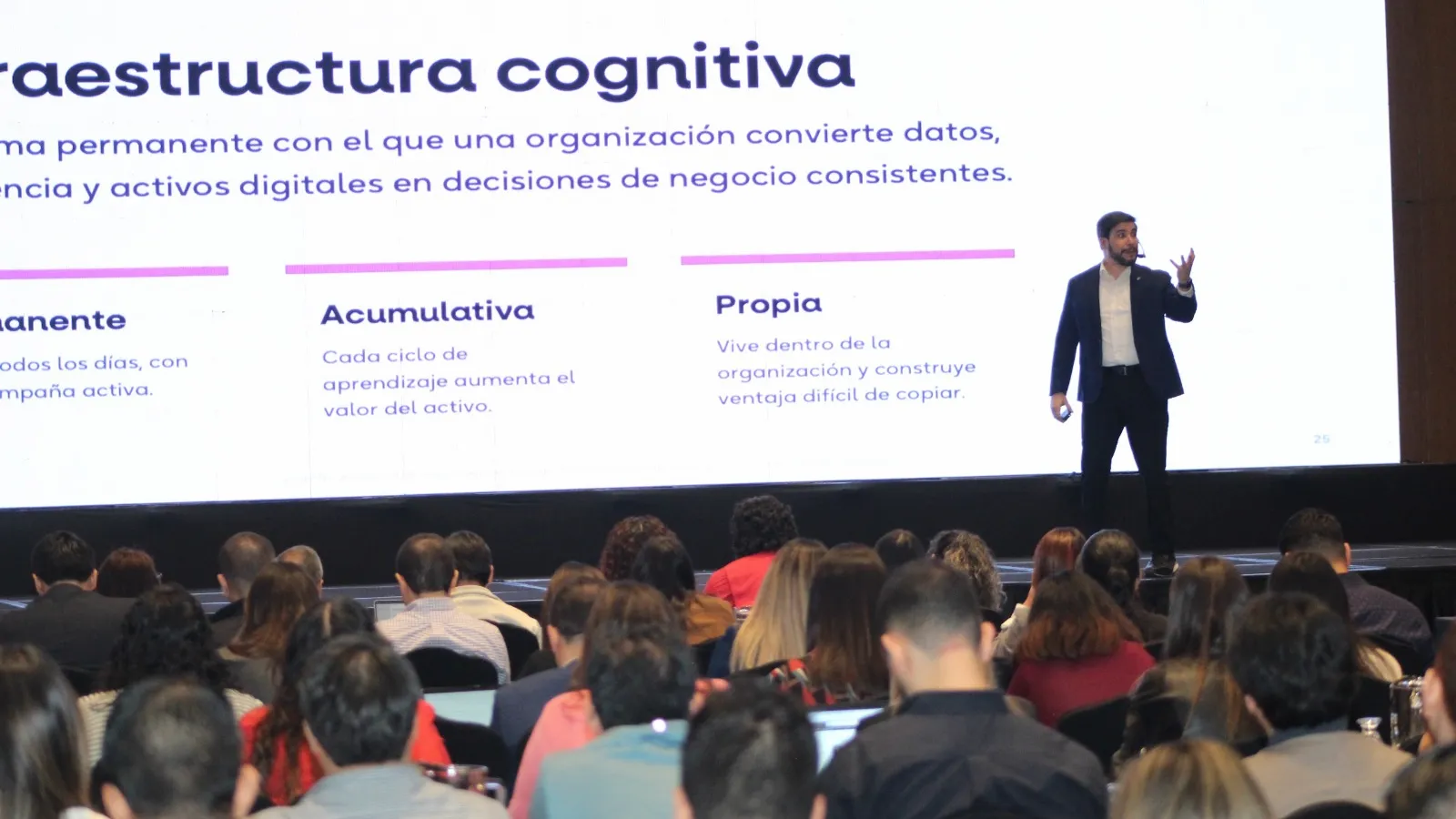
What sets apart a company that reacts to change from one that manages to anticipate it? That was one of the central reflections of the talk “Cognitive infrastructure: how the organizations that learn fastest turn data, intelligence and digital assets into a sustainable competitive advantage from marketing”, presented by Arturo López Valerio, founder of Tabuga, during the Marketing Tech Summit Guatemala, an event that counts on Universidad Galileo as its main sponsor.
(M&T)-. In an environment where emerging technologies appear at an ever-increasing speed, López Valerio argued that the real challenge is no longer accessing more data, but developing the organizational capacity to turn it into effective decisions. From his perspective, the competitive advantage of modern companies does not depend solely on the technology they use, but on how quickly they can learn and act on the information they receive.
To illustrate this acceleration, the specialist recalled how platforms such as Netflix, WhatsApp, Instagram, TikTok or ChatGPT reached millions of users in ever shorter periods. However, he warned that the mass adoption of a tool does not necessarily guarantee its permanence or its real impact on business. What matters, he said, is understanding the value it generates for users and for the organization.
One of the central concepts of the talk was that of cognitive infrastructure, defined as the set of systems, processes and mechanisms that allow a company to pick up market signals, interpret them, turn them into knowledge and use them to make decisions faster than its competitors. According to López Valerio, many organizations accumulate information across different channels but keep that data fragmented in isolated areas, which makes it harder to get a comprehensive view of the business.
From data overload to business intelligence
During his presentation, the founder of Tabuga explained that companies currently face a paradox: they have more information than ever, but not necessarily better criteria for deciding. Social networks, CRM, customer service platforms, digital campaigns and internal systems generate enormous volumes of data that, in many cases, remain disconnected from one another.
In this context, he held that artificial intelligence represents an important opportunity, but also a risk if it is used solely as an isolated tool. In his view, organizations must avoid confusing technology with strategy. Before automating processes or deploying intelligent agents, it is necessary to build a solid foundation of data governance, business context and clearly defined decision systems.
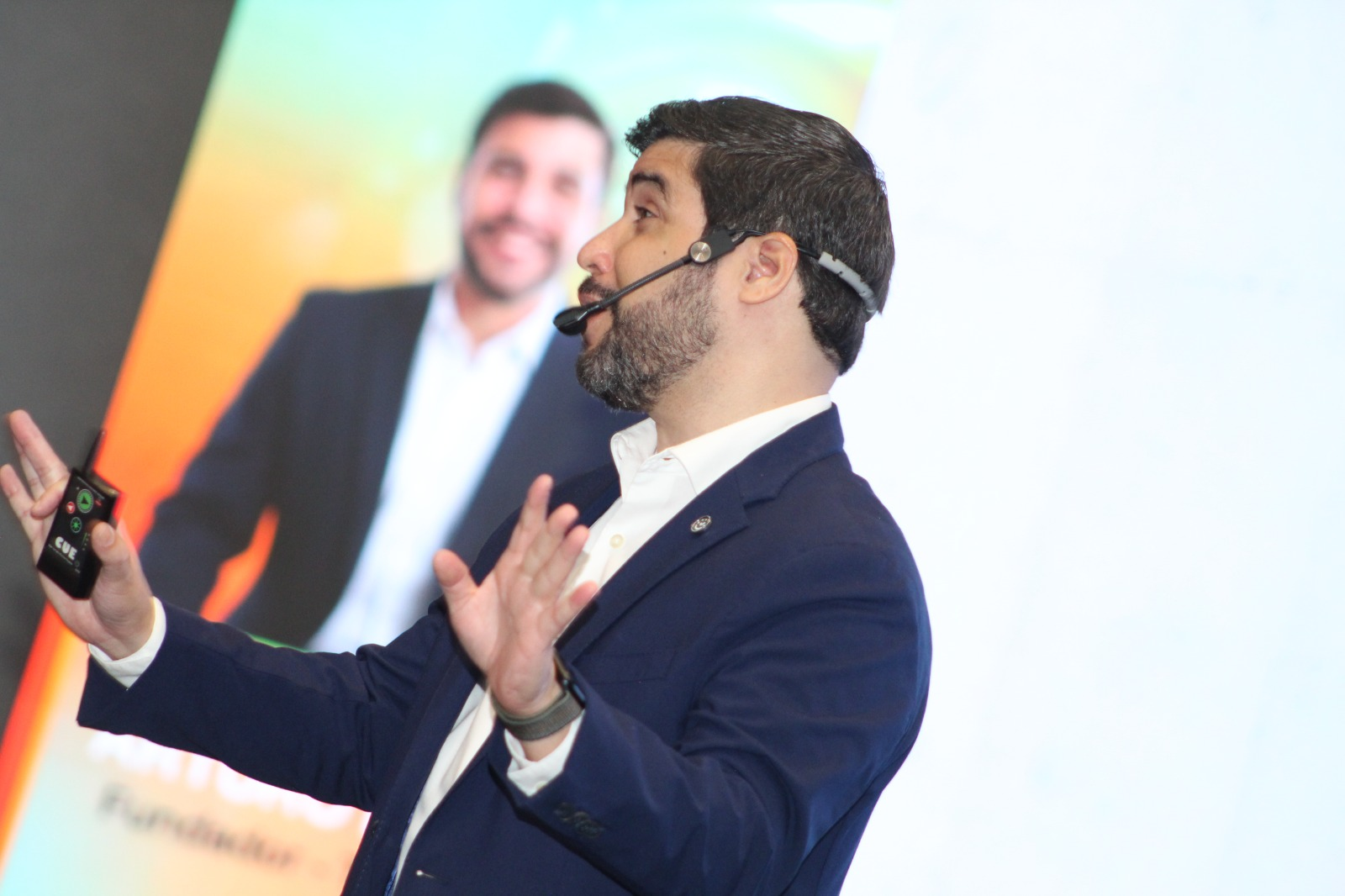
López Valerio insisted that companies should not depend exclusively on external tools or third-party platforms to develop their marketing and communication capabilities. Social networks, messaging apps and other digital ecosystems offer relevant opportunities, but they are also spaces over which organizations have limited control. For that reason, he recommended strengthening their own assets, such as platforms, knowledge bases and internal learning systems.
Learning faster to compete better
Another highlighted message was that learning speed is becoming a decisive factor for competitiveness. As he explained, smaller, more agile teams can react faster than complex corporate structures when they manage to turn information into concrete actions.
To that end, he proposed three fundamental pillars: instrumenting data, chain intelligence and strengthen their own digital assets. These elements make it possible to build organizations that can learn continuously and generate cumulative knowledge, instead of restarting processes every time they face a new challenge.
Throughout the talk, he also shared examples of initiatives developed by Tabuga to turn scattered information into analysis platforms, strategic content and organizational learning systems. These cases illustrated how a suitable structure can turn market signals into tools for positioning, influence and value creation.
In closing, López Valerio urged attendees to question their work models on an ongoing basis and to check whether the information they generate is actually contributing to decision-making. In a setting shaped by artificial intelligence, automation and growing digital complexity, he stated that the organizations that manage to learn faster will be the ones with the best chances of sustaining competitive advantages over the long term.
Source: Marketing Tech Summit Guatemala