Experts cite challenges to becoming a digital "hub"
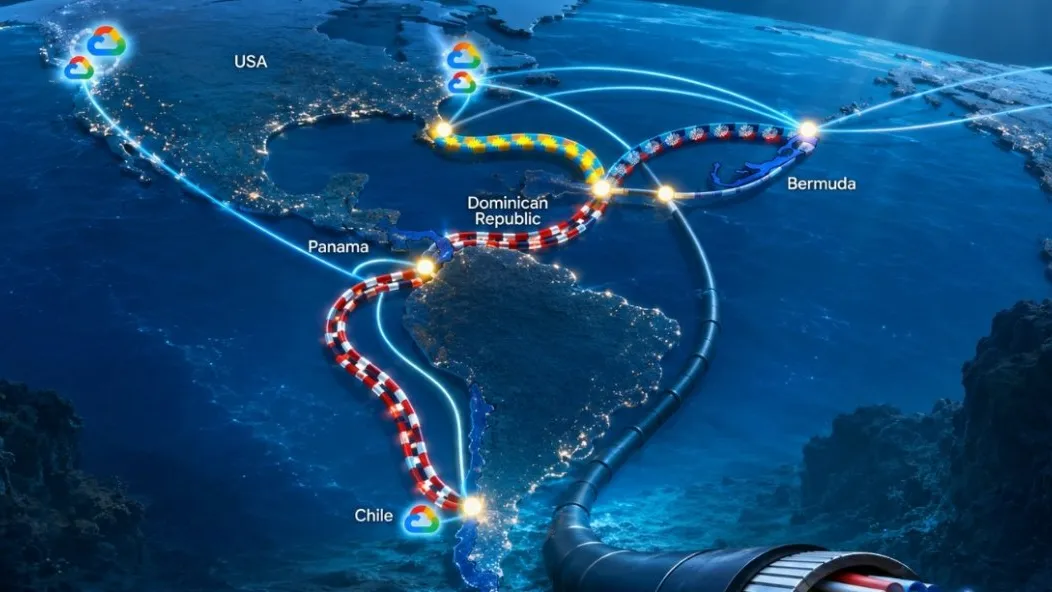
Warning. Google's submarine cables are not enough to turn the DR into a digital “hub”
Specialists agree that becoming a hub requires competitive energy, skilled talent and clear access rules.
The expansion of the submarine cable network that Google is developing in the Dominican Republic will not, on its own, turn the country into a regional technology center, since it requires competitive energy, skilled talent and an open-access regulatory framework.
That was the view of three technology specialists consulted by HOY, who separately stressed that without those tools the new infrastructure risks being reduced to a transit point for other countries' data traffic.
The technology entrepreneur Arturo López Valerio, founder of the Tabuga Think Tank, called that risk “the inputs trap”. He said the country has spent two decades producing inputs whose value is captured in another jurisdiction, a pattern that, as he explained, repeats itself with sugar, talent and now fiber optics. He added that infrastructure creates the condition, but that capturing value requires public policy.
Along the same lines, Mite Nishio, vice president of the Cámara TIC, stressed that a submarine cable without an ecosystem of energy, data rules and certified talent “is a highway with no cars”. She stated that the country's challenge is not connecting to the world, but turning that connection into knowledge, companies and jobs.
For his part, Manuel Mendoza, coordinator of the National Observatory of Information and Communication Technologies (ONTIC) at INTEC university, explained that the new cables add to the international digital exchange point that Google announced in February, a center that will process and store data within the national territory. He said that this combination positions the DR as a key node in the region, provided the presented plan is carried out.
Mendoza and Nishio agreed on the urgency of the training component, and stated that if talent is not developed while the infrastructure is being built, the country risks ending up importing specialists to operate a system installed on its own territory.
Strengthening education
The experts also agreed that the country is not fully prepared in educational terms to take advantage of this opportunity. López Valerio noted that the Dominican Republic fell from position 90 to 97 in the Global Innovation Index between 2020 and 2024, and dropped from sixth to ninth place in the Latin American Artificial Intelligence Index, a decline that occurred during years of sustained economic growth.
Google's announcement includes the installation of the Solios, Canoa and OlaLuz submarine cables, as well as a new branch of the Firmina system landing directly in the Dominican Republic.
Title: Experts cite challenges to becoming a digital "hub"
Author: Mayelin Acosta Guzmán
Outlet: HOY, print edition
Date: Friday, August 14, 2026
Section: Economy, p. 12