Innovation, semiconductors and the talent we fail to retain
Review of Arturo López Valerio appearance on October 21, 2026 on Esto No Tiene Nombre: the Global Innovation Index, public technology procurement, semiconductors and the flight of «invisible» talent.
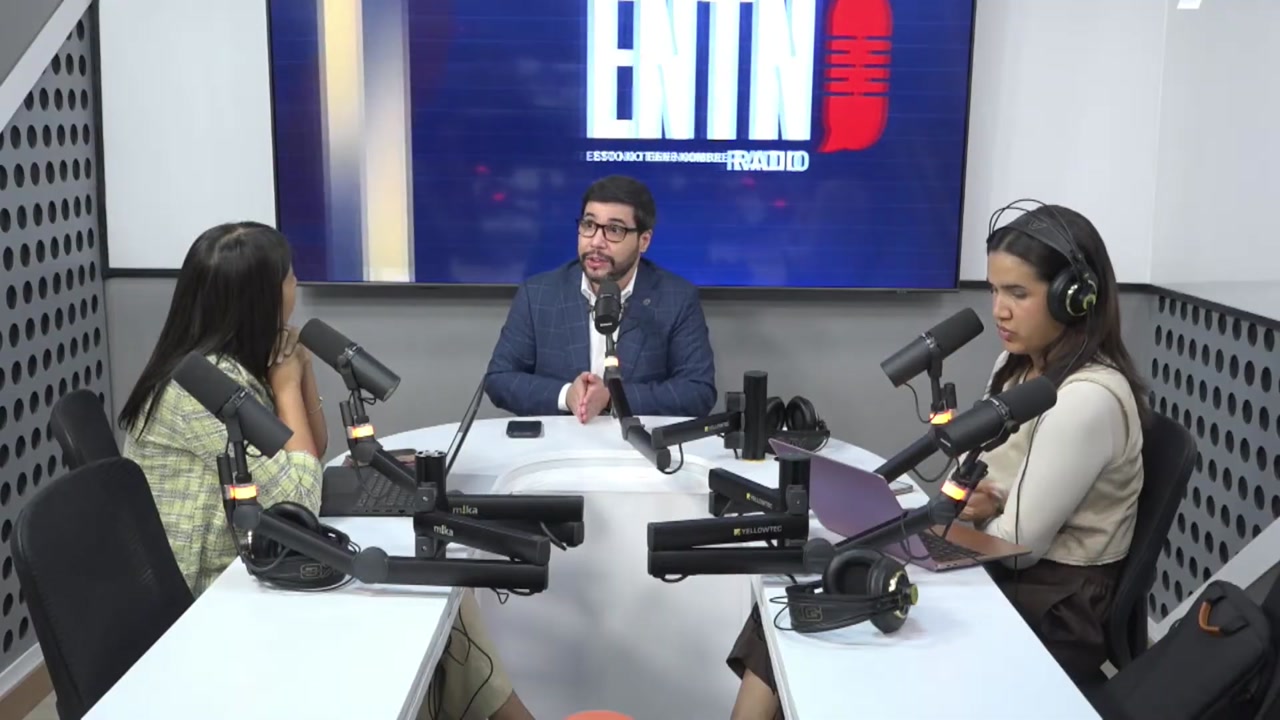
On Wednesday, October 21, 2026, Arturo López Valerio returned to Esto No Tiene Nombre, on La Nota 95.7 FM, to talk about what the Global Innovation Index 2026 shows bluntly: the Dominican Republic is not tapping its potential to innovate and is not positioned for the next technological leap.
He started from a simple idea: he goes to these spaces out of parrhesia, to say what needs to be said because it serves the country, not because someone commissioned an oversight exercise from him. With that framing, the contrast is clear. The country has plans for 2036 to double GDP, but the index points out that this path doesn't add up unless money is put where the world is moving.
«We have plans to double GDP by 2036, but the index is telling you that won't be possible, because we are not putting money where the world is moving.»
López Valerio used the example of Costa Rica and Intel's exit: talent was trained for a foreign factory and, when the investment moved on, people were left unemployed. Foreign investment follows profit; it cannot mortgage Dominicans' future for present income. What looks good in the narrative does not always show up in the country's performance.
«I can't gamble away Dominicans' future for present income.»
On public technology procurement, he cited open data from the Dirección General de Contrataciones Públicas: about 80% is concentrated and, following the Pareto logic, 20% of companies take most of the tenders. If the goal is real employability, he warned, that purchasing must be spread across more domestic companies capable of retaining and training talent, instead of waiting for a foreign «factory» that one day decides it no longer suits it.
Semiconductors also came up. The strategy can work as an investment magnet, but the innovation index shows a lack of internal coordination, researchers and data reporting. Manufacturing at scale is not the same as owning the intellectual property of the design. Without that layer, the risk is repeating the free-trade-zone model: assembling what others designed.
On talent, the country needs engineers who build, program and design. Retaining them is another layer. Some people live here, shop at the supermarket and get paid abroad: López Valerio calls them «the invisibles». If the local market doesn't link that knowledge into its own chains, it gets exported. The same happened in the creative economy: after film incentives were cut, the country went from high positions to a sharp fall in that sub-index. When the bureaucratic incentive switches off, the industry is left hanging. That could happen with microprocessors or with artificial intelligence if everything depends on the narrative of the moment.
«What isn't measured doesn't get fixed.»
He closed by insisting on measurement. Some indicators —including electricity generation— have stopped being reported. Without data there is no correction, and the country is a decade away from the target 2036 with a trend that, in innovation and artificial intelligence, does not match the rhetoric.
Watch the full appearance: ESTO NO TIENE NOMBRE — Wednesday 21 October 2026 (La Nota 95.7 FM). His segment begins around minute 4.
Summary based on the YouTube broadcast of the program Esto No Tiene Nombre from October 21, 2026.
This appearance is also published on T al Cubo, as an appearance of the Tabuga Think Tank: «Innovation potential is lost if talent is not retained».