Two indices, one gap
In December 2022 I wrote that the local innovation formula had stalled because the authorities' approach since 2012 had been to strengthen the state apparatus and keep investing in infrastructure.
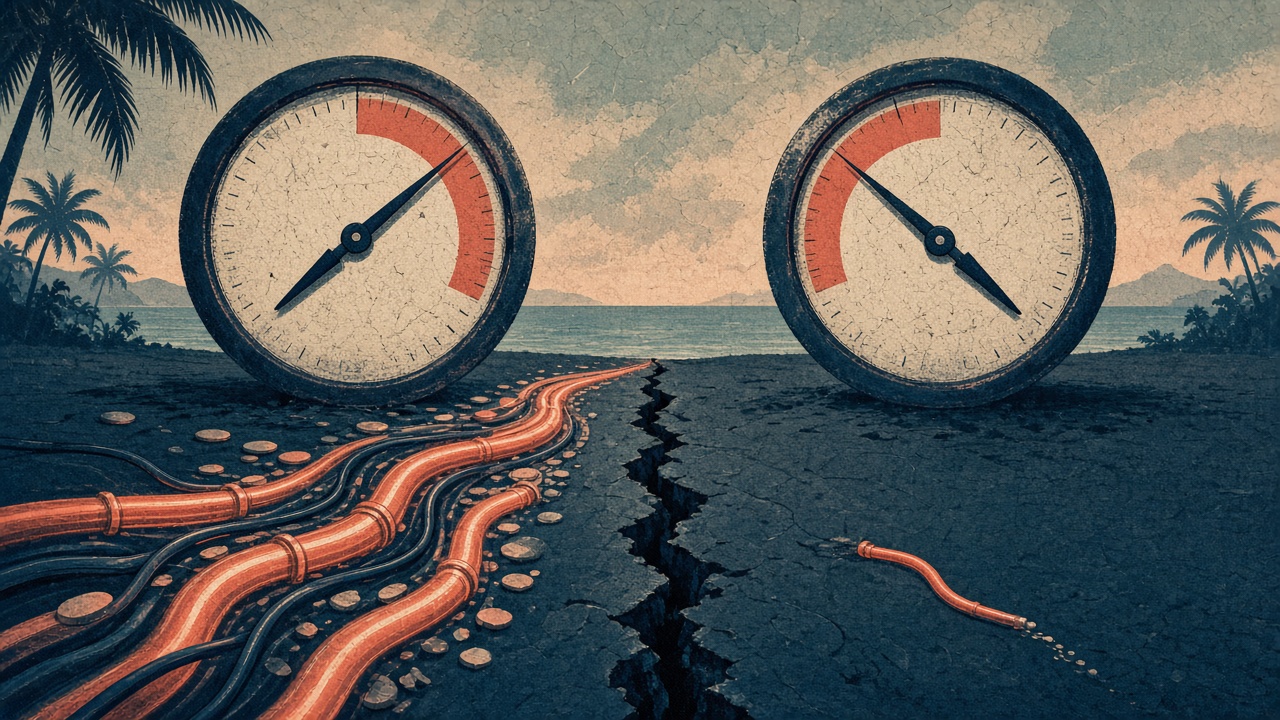
In December 2022 I wrote that the local innovation formula had stalled because the authorities' approach since 2012 had been to strengthen the state apparatus and continue investing in infrastructure. As a result, the Dominican Republic produces fewer innovation results relative to the level of investment made. Four years later, two reports confirm that sentence with numbers. The Global Innovation Index 2026 places us at rank 99 out of 139 economies, with a gap of 23 positions between what the country puts into innovation and what it gets out. The ILIA places us tenth among 20, with a gap of 46 points between governance and research.
In the GII, between 2024 and 2026 innovation inputs rose from rank 94 to 87 while outputs fell from 99 to 110. We receive more and produce less. Scientific articles per unit of GDP rank 138 out of 139. As a case in point, the country has 20 full-time researchers per million inhabitants according to 2022 data, since that figure stopped being reported afterward. When a country stops measuring itself, others make the estimate. I mention it because here, whoever stands still falls behind.
The ILIA shows that the Dominican Republic scores 73.2 points in governance and 27.1 in research, development and use, with an overall score of 45.1, barely above the regional average, after ranking seventh in 2024 and ninth in 2025. The National Artificial Intelligence Strategy of 2023 opened the debate, assigned those responsible and signed international commitments. Three years later it still has no budget line, yet the communication is scheduled to make us think that investment is going into people. In the region, only Brazil and Colombia allocate specific resources to their strategy.
What connects the two gaps? Only one GII pillar improves, business sophistication, which rose from rank 87 to 76 in one year. Tabuga Intelligence notes that the country spends more than US$300 million a year on artificial intelligence and invests only about US$10 million in developing it. Every day the market and businesses are growing more sophisticated, but our talent and research continue to lag behind. What companies return in outputs fell 8 places in the same year that absorption rose 11. The country is an engine with only one moving part. Conclusion? Lots of motion, little output.
The base exists. 91% of households have Internet access. Fixed broadband costs 1.9% of monthly per capita income. Our developer community is among the regional strengths. The ILIA shows that 27.6% of large Latin American companies use artificial intelligence, but only 6.8% of small ones, which are the majority of the Dominican productive sector.
In 2024 I wrote that innovation is at risk because the same development formula keeps being repeated, and that its use as political capital shows in initiatives that include the same actors, the same institutions and the same recipients of resources. CiudadanIA, carried out directly by the State instead of being put out to tender to local companies, was the case in 2025 and I described it as a non-cooperative Nash equilibrium. Innovation resources must flow toward all the axes to enable a true ecosystem. That requires an AI strategy with an identifiable, evaluable budget, a competitive applied-research fund with private co-financing, and public procurement that demands knowledge transfer. In the 2027 edition we should be able to identify how much was invested, how many applied research projects were carried out and what technical capabilities remained in the country.
Innovation is for everyone.
Originally published in Listín Diario on October 27, 2026.