The government shares your data and nobody knows how it is used
On Wednesday 11 November 2026, on Esto No Tiene Nombre, Arturo López Valerio analyzed Decree 787-26 and warned that 33 institutions exchange citizen data with no public registry and no regime of consequences.
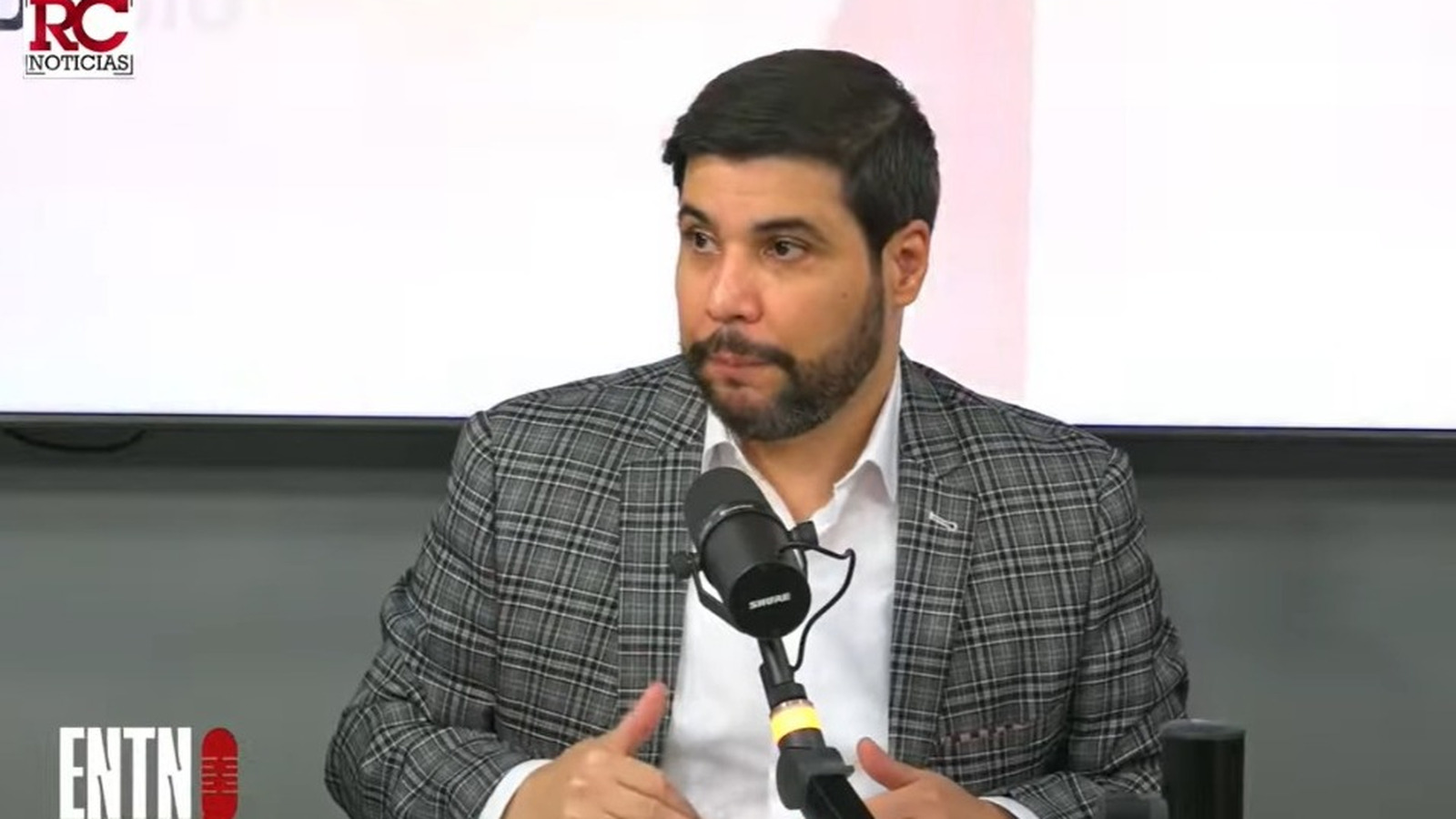
On Wednesday, November 11, 2026, Arturo López Valerio returned to Esto No Tiene Nombre, on La Nota 95.7 FM, this time in person. The focus was Decree 787-26, signed on November 2 by President Luis Abinader, which approves the Code of Ethics for Artificial Intelligence in Public Services.
Read the article at robertocavada.com. Katherine Espino reported in RC Noticias the proposal for a public registry to show what data state institutions exchange and who consults citizens' information.
López Valerio welcomed the fact that the decree exists. It covers the ethical use of artificial intelligence in the State's centralized and decentralized institutions, bans social scoring and profiling by neighborhood or socioeconomic status, and creates an Artificial Intelligence Ethics Council. He also warned that regulating the tool is not enough: for two or three years he has been calling for stronger oversight of how data is cross-referenced between institutions, so that citizens' rights are not violated, regardless of which system is used.
«Where does bias come from? From the data.»
In 2024, 33 government institutions signed an interoperability agreement for security purposes, implemented through X-Road, an open-source platform originating in Estonia. According to his research, questions remain about which data is shared, which institutions have access, and who is responsible for its governance.
«Basically, there are no references on what data is being cross-referenced among the 33 institutions, which data is open, or who is in charge of governance.»
The decree looks like a structure to avoid making mistakes from now on, but it does not resolve what has already been done.
«The decree can't tell us to wipe the slate clean.»
The Ley 172-13, on comprehensive protection of personal data, already requires institutions to share information so that citizens don't have to go from office to office to collect a single piece of data, and states that the data subject must give consent. That framework remains in force. The decree seeks to prevent errors with artificial intelligence, but it does not absolve those that already exist: today it is not known how citizens' data is being shared. Since December 2013 the Junta Central Electoral has shared databases to verify the cédula; there was no regulation, oversight, or consequences in that exchange.
Of the decree's seven blocks of mandates, the two most important are not to use social profiling with public data and that the State may not judge someone based on a configuration of data —for example, assuming that everyone in Alma Rosa has a certain type of behavior—. A council is created to examine those uses, but DIGEIG cannot compel: it will issue a report and, if an institution does not comply, it simply didn't. The decree has no penalties. In the Latin American Artificial Intelligence Index the country scores high in governance —72, one of the best on the continent— and one of the lowest in execution. Without consequences, it won't be executed.
He proposed, on air, that the mapping of institutions —which have until May 2027 to regulate how they use artificial intelligence— include data governance, and that DIGEIG request it even though it is not in the decree.
«Because we won't be able to regulate an AI if we don't look at its data sources, which are what feed these artificial intelligence engines.»
Also, that there be a public registry of those exchanges: a mechanism to monitor what information flows among the 33 institutions.
«That there be a public registry of those 33 relationships between public institutions, so we can know what citizens' data is shared.»
«I want to know: when I check with my cédula, whom did I give permission to? Or who took a permission I didn't give?»
«If we start there, that decree will take us light years forward as a country.»
For López Valerio, this is not optimism: it is a moral mandate, parrhesia. The State has top-caliber professionals; what is missing are fundamental decisions and a regime of consequences, also for the ethical use of data, not only of artificial intelligence. Technology regulation must be accompanied by controls on the handling of citizens' information, to prevent rights violations, leaks, and possible discriminatory practices. Citizens should be able to say they don't want to share something —except with defense and national security institutions—. The technology is there; what is missing is putting it together.
Watch the full interview: «The government shares your data and nobody knows how it is used», on the Esto No Tiene Nombre channel (La Nota 95.7 FM).
Article published on robertocavada.com: «Who consults your data? Public registry proposed to monitor State institutions», by Katherine Espino, RC Noticias, November 11, 2026.
Review also based on the YouTube broadcast of the program Esto No Tiene Nombre from 11 November 2026.
Related reading: «The data agreements that feed algorithms», column in Acento, 11 November 2026.
This appearance is also published on T al Cubo, as an appearance of the Tabuga Think Tank Tabuga: «33 institutions exchange data without a public registry».