History as the Mother of Reality
In chapter IX of Don Quixote, Cervantes speaks of «truth, whose mother is history», and describes it as a witness to what has passed and a warning of what is to come. Three centuries later, Borges imagined Pierre Menard, a French author who rewrites that same sentence word for word: the text remains identical, but the meaning changes. Read in the twentieth century, the sentence turns history into the origin of reality, and historical truth amounts to what we judge happened.
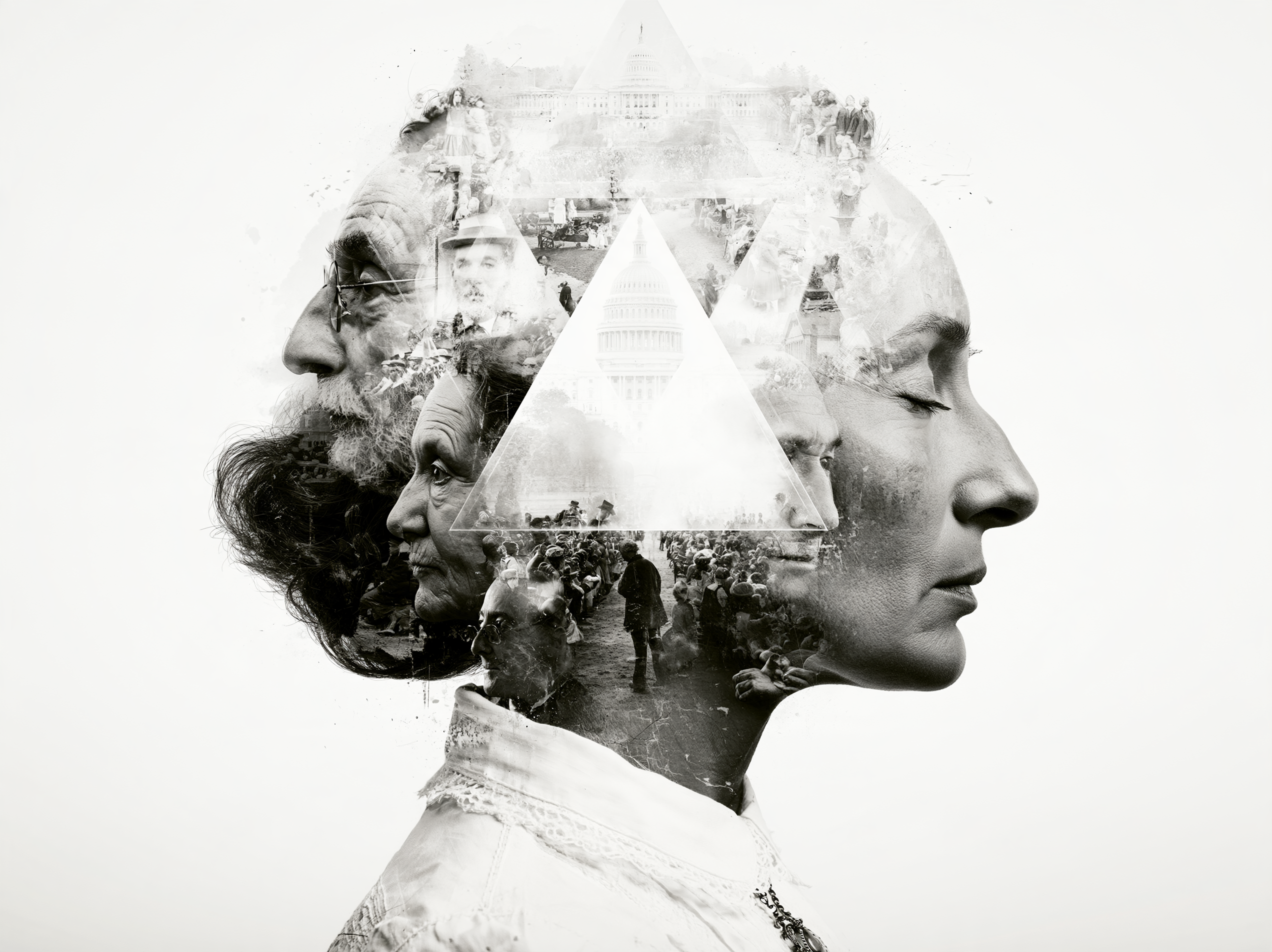
In chapter IX of Don Quixote, Cervantes speaks of «truth, whose mother is history», and describes it as a witness to what has passed and a warning of what is to come. Three centuries later, Borges imagined Pierre Menard, a French author who rewrites that same sentence word for word: the text remains identical, but the meaning changes. Read in the twentieth century, the sentence turns history into the origin of reality, and historical truth amounts to what we judge happened.
In the twenty-first century, machines begin to issue that judgment when one in ten people gets the news from a chatbot every week, according to the Reuters Institute’s Digital News Report 2026. In the previous year’s report the figure stood at seven in a hundred, and among young people aged 18 to 24 it reaches 17%. This shows that whoever asks about the past will receive the answer of a model trained with a specific language, according to W3Techs, an organization that measures 49.5% of websites as English-language and only 6% as Spanish-language. Chile’s Cenia, the institution I represent in the Caribbean for Latam-GPT, estimates that our region contributes between 2% and 3% of the data with which those models are trained.
Three researchers from the University of Bucharest, Cocu, Cristia and Dumitran, posed the same controversial questions in 2025 to 13 models in Romanian, English, Hungarian and Russian. The results showed that the answers varied by language, demonstrating that these systems operate as malleable narrative engines. Although Menard is fictional, he has his successors, because the same text, placed in another language and another era, produces another truth. The corpus a machine is trained on works as the history Cervantes wrote about, and whoever controls the corpus begets «the reality» the model returns.
In 2009 I wrote that «our people are a people without memory» and that social networks made us live in a «continuous present». Seventeen years later, that continuous present has consequences on another scale, and the habit comes from far back. In associations, chambers, companies and even governments, power that fears a fact, a piece of evidence or a record starts by misplacing the source, and each administrator begins a term with an empty archive. A country that documents little lets others document it, and what others judge happened to us will be «the truth» that a Dominican student reads when asking about Santana, Báez or Trujillo. I remember that, when a foreign domain provider threatened to suspend this same newspaper, I warned that «when the custodian of a digital archive answers to another constitution, national history becomes subject to commercial clauses». The warning now applies to the training data of artificial intelligence.
Latam-GPT and its roughly 300 billion tokens of Latin American text have the reach that can encompass Dominican memory if someone wants to democratize it. I understand that institutions such as the Archivo General de la Nación, the Biblioteca Nacional, the universities and the newspapers with century-old archives must agree at some point on when they will integrate their archives into the region’s open corpora. Two weeks ago I cited in this newspaper article 110 of the Constitution, evoking the principle of non-retroactivity for what is coming. The history we hand to machines today will be the reality they return tomorrow, and that is, as Cervantes intended, the warning of what is to come.
Originally published in Listín Diario on November 24, 2026.